
Indoor vs Outdoor Doggy Day Care for City Dogs
City life offers many advantages, but it also shapes the way dogs experience their days. Flats instead of gardens, busy streets instead of open fields, and long working hours can all influence a dog’s routine, behaviour, and overall well-being. For many urban owners, doggy day care becomes an important way to support their dog while balancing work and city living.
One of the most common questions owners ask is whether indoor or outdoor doggy day care is better for city dogs. Both options exist, and both can suit certain dogs. However, the environment itself plays a major role in how dogs feel during the day and how well their needs are met.
This article explores indoor versus outdoor doggy day care from a city dog's perspective. It looks at the key differences, why environment matters so much for urban dogs, and why an outdoor-focused approach, such as the one taken by Man’s Best Friend, is often a strong match for dogs living in London.
What Indoor Doggy Day Care Typically Looks Like
Indoor doggy day care takes place primarily inside a building or enclosed space. Dogs spend their day within a controlled indoor environment where temperature, noise, and activity levels are more predictable.
For some dogs, especially those that are naturally calm or easily overstimulated, an indoor setting can feel familiar. Many city dogs already spend a large part of their lives indoors, so this type of environment may not feel intimidating or overwhelming.
Indoor spaces are also unaffected by weather, which some owners see as a benefit. Rain, cold, or heat do not change the structure of the day, and routines remain consistent.
However, indoor environments do have limitations. Space is finite, movement is restricted by walls, and sensory experiences tend to be repetitive. For dogs that already live in flats and spend evenings indoors, additional indoor hours during the day may not fully meet their physical or mental needs.
What Outdoor Doggy Day Care Offers
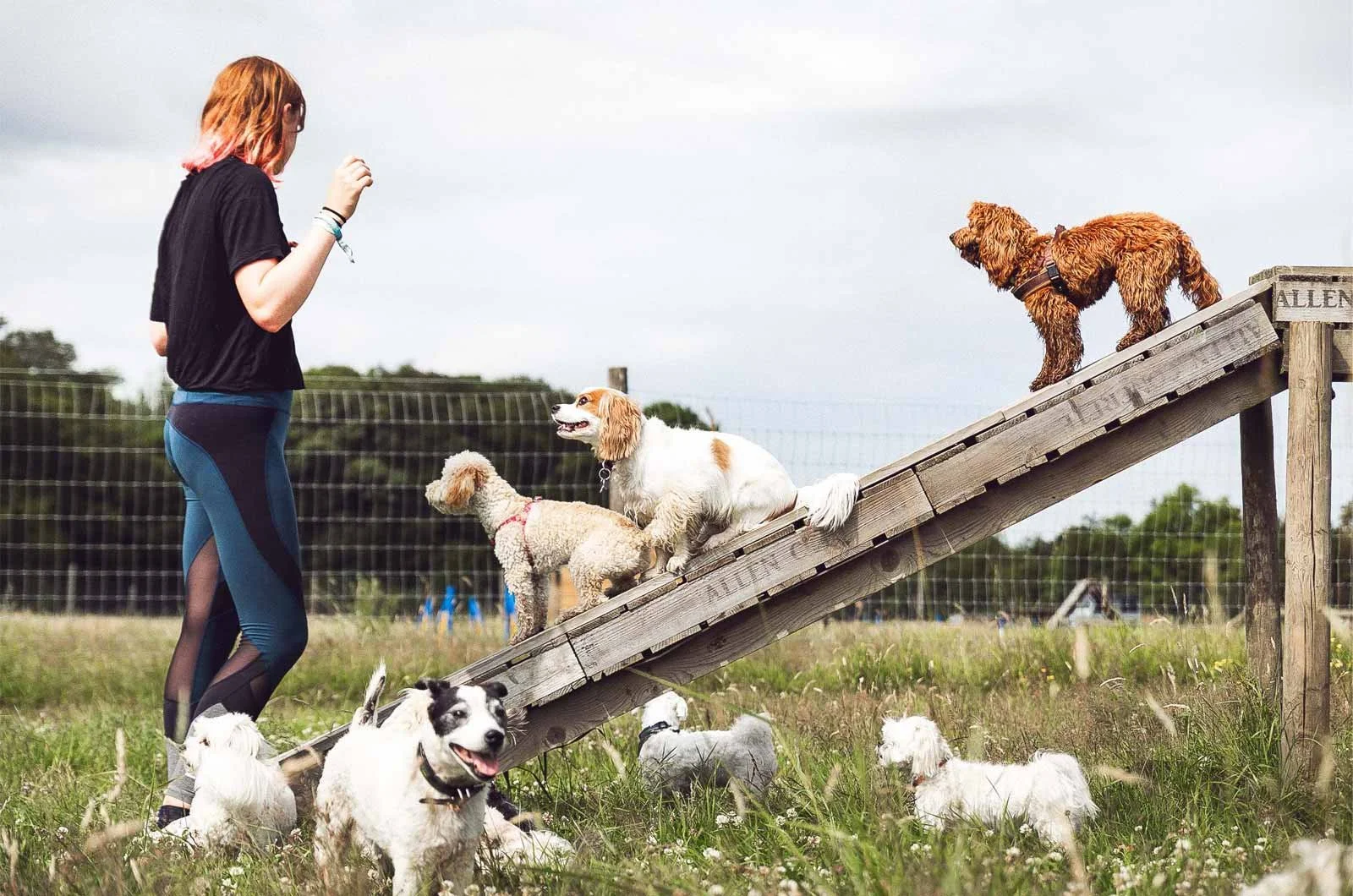
Outdoor doggy day care centres around time spent outside in open environments. Dogs are given space to move freely, explore their surroundings, and engage with the world through natural sights, smells, and textures.
For city dogs, this type of environment often feels very different from home life. Fresh air, daylight, and open space can provide a sense of release from the constraints of urban living.
Man’s Best Friend focuses on doggy day care that values outdoor space and natural surroundings. This approach recognises that many dogs living in the city benefit from spending their day in an environment that allows them to behave more naturally, rather than replicating an indoor home setting.

Space and Movement: A Key Difference
One of the most noticeable differences between indoor and outdoor doggy day care is space.
Indoor facilities are always limited by the size of the building. Even well-planned indoor areas can only offer so much room for dogs to move, stretch, and change pace. Movement often happens in short bursts rather than naturally throughout the day.
Outdoor doggy day care offers a very different experience. Open space allows dogs to move at their own rhythm, whether that means walking, trotting, or simply exploring. For city dogs that spend much of their time in confined spaces, this freedom of movement can have a positive impact on both energy levels and behaviour.
This is one of the reasons many owners exploring doggy day care are drawn to outdoor-based options.
Sensory Stimulation and Mental Engagement
Dogs experience the world primarily through their senses, particularly smell. A stimulating environment is not just about exercise but also about mental engagement.
Indoor environments provide controlled and predictable sensory input. This can suit dogs that prefer calm surroundings, but it may limit opportunities for enrichment. The same smells, sounds, and surfaces are encountered day after day.
Outdoor environments are constantly changing. New scents, different ground textures, natural sounds, and visual variety all contribute to mental stimulation. For city dogs, this type of enrichment is often difficult to provide during short morning or evening walks.
Outdoor doggy day care helps fill this gap by offering dogs a richer sensory experience during the working day.
Why Environment Matters So Much for City Dogs
Urban dogs face challenges that are less common in rural settings. Noise, crowds, traffic, and limited access to green space can all affect a dog’s stress levels and behaviour.
The right doggy day care environment can help counterbalance these pressures by providing:
Relief from confined indoor spaces
Opportunities for natural movement
Mental stimulation through varied surroundings
Time spent in fresh air and daylight
For many owners, choosing doggy day care is not just about supervision during work hours. It is about improving their dog’s quality of life within a city environment.
Indoor Day Care in an Urban Routine
Indoor doggy day care can work well for certain dogs. Older dogs, dogs with lower energy levels, or dogs that are sensitive to weather or noise may feel more comfortable indoors.
However, many city dogs already spend evenings and nights inside their homes. When the working day is also spent indoors, dogs may miss out on experiences that support natural behaviour and wellbeing.
This is often where owners begin to question whether an indoor setting truly complements city living, or whether an outdoor environment might better balance their dog’s routine.
Outdoor Day Care as a Contrast to City Life
Outdoor doggy day care provides contrast. Rather than mirroring the indoor home environment, it offers something different.
At Man’s Best Friend, doggy day care is shaped around the idea that dogs benefit from being outdoors during the day. Space, fresh air, and natural surroundings are central to this approach. For city dogs, this can mean returning home calmer and more settled after a fulfilling day.
This outdoor focus does not aim to overwhelm dogs, but to give them access to experiences that are often limited in urban life.
You can learn more about how environment and space are considered by visiting the doggy day care facilities page.
Comparing Indoor and Outdoor Care for Owners
From an owner’s perspective, indoor doggy day care may feel similar to leaving a dog in a managed indoor setting, while outdoor doggy day care may feel closer to giving a dog a day away from the city.
Owners often consider questions such as:
Does my dog already spend most of their time indoors?
Does my dog enjoy outdoor exploration?
Does my dog seem restless or bored at home?
Would time outdoors support my dog’s energy levels?
For many city dogs, outdoor doggy day care offers experiences that owners simply cannot provide during a standard working week.

How Doggy Day Care Fits Into a Healthy Lifestyle
Doggy day care is not meant to replace time at home or regular walks. Instead, it forms part of a balanced routine.
When chosen thoughtfully, doggy day care can support mental stimulation, physical movement, and social interaction. Outdoor-focused care can be especially helpful for dogs living in cities, where access to space and nature is limited.
To understand how doggy day care supports city dogs more broadly, check out Man’s Best Friend facilities and explore how doggy day care fits into urban life.
Frequently Asked Questions
Is indoor or outdoor doggy day care better for city dogs?
There is no single answer. Many city dogs benefit from outdoor environments because they provide space, fresh air, and stimulation that may be limited at home.
Can outdoor day care help with boredom?
Yes. Outdoor environments offer varied sensory experiences that can help reduce boredom and restlessness in many dogs.
Are indoor environments unsuitable for active dogs?
Some active dogs may prefer more space and movement than indoor environments typically allow, especially if they already live in small homes.
How important is the environment when choosing doggy day care?
The environment plays a significant role in a dog’s daily experience. Choosing an environment that complements city living can support better overall well-being.